We use cookies to make your experience better. To comply with the new e-Privacy directive, we need to ask for your consent to set the cookies. Learn more.
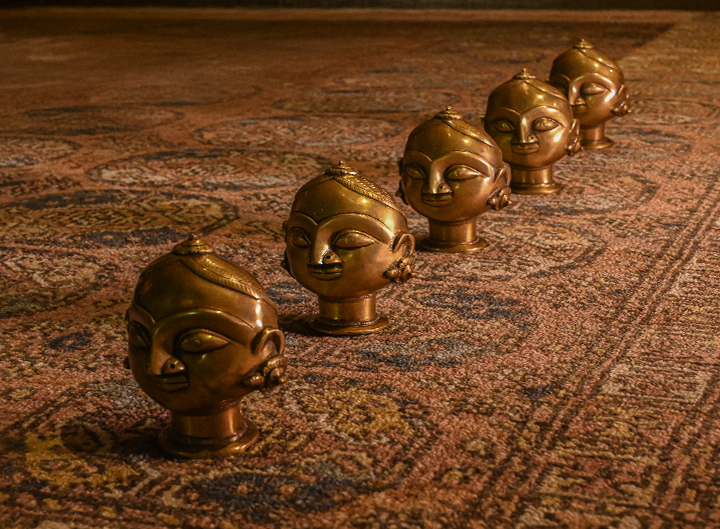


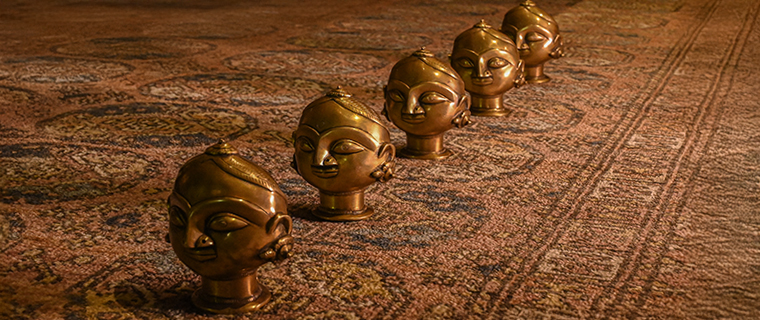
Through essays, archival discoveries, and conversations around craft and design, ARCHIVE INDIA is an anthology of the objects, ideas, and traditions that define India's material culture. Each archive offers a thoughtful lens into the enduring relationship between heritage, materiality, and design.
ARCHIVE 01: GAURI HEADS
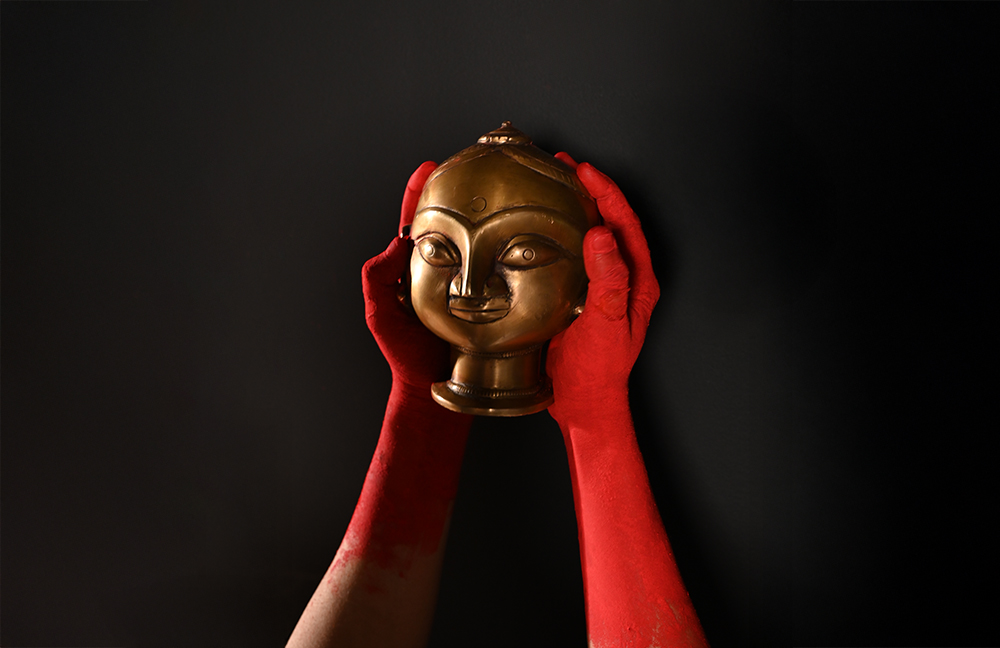
Among the many manifestations of the Goddess in the Hindu pantheon, Gauri occupies a place of reverence. A manifestation of Parvati, consort of Shiva, her name translates simply as the glowing one - an embodiment of fertility, prosperity, and auspicious beginnings.
Traditionally worshipped during the annual Gauri festival, painted metal heads such as these were often venerated in pairs. The softly arched brows and almond-shaped eyes evoke serenity; the tilaka marks her as a married goddess, while elaborate hair ornaments and painted adornments speak to the ceremonial act of dressing the divine. These embellishments were not merely decorative, they reflected a living tradition in which devotion found expression through touch, decoration, and ritual.
To encounter a Gauri head today is to witness an object that has absorbed generations of reverence. It is both sculpture and sacred presence, a testament to the enduring dialogue between craftsmanship, faith, and the rituals that continue to shape India's culture.

$191.00
$191.00

$443.00
$443.00
ARCHIVE 02: YALI
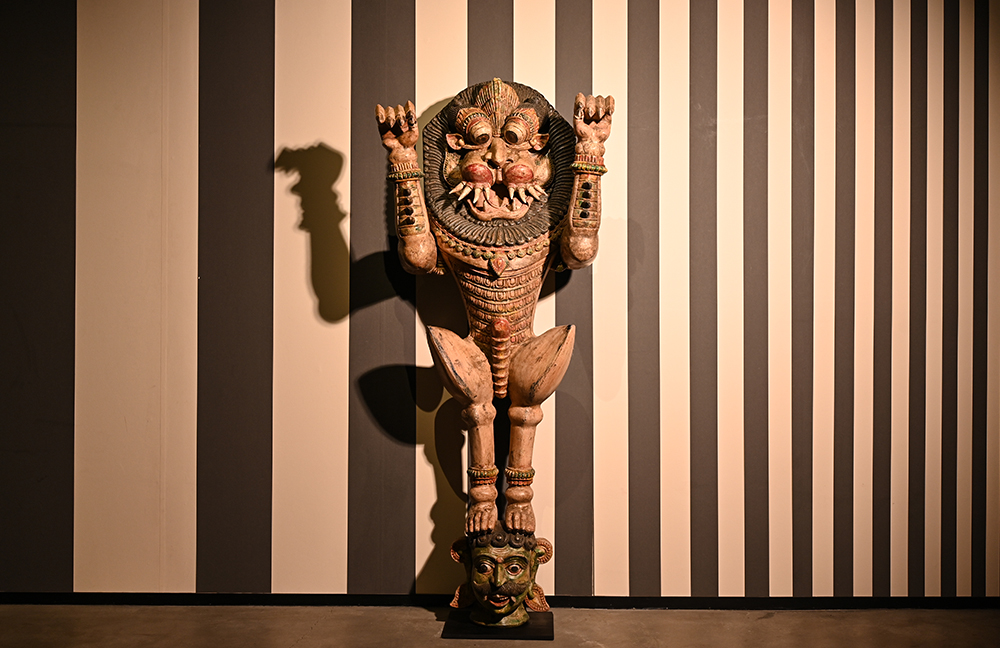
Long before they became admired as sculptural forms, Yalis belonged to the architecture of belief. They stood at temple thresholds and pillared halls as guardians, watching over the passage between the earthly and the divine.
Neither lion nor elephant, nor serpent or horse, the Yali exists beyond taxonomy. Its body is an imagined constellation of creatures. In Indian sacred art, such hybridity was never an exercise in fantasy; it was a visual language for expressing forces that could not be contained by the natural world alone.
Emerging prominently during the Pallava and Chola dynasties, the Yali became an enduring motif across the temple architecture of South India. Carved into granite pillars, poised along mandapas and gateways, it often rears above subdued demons, its flared mane, curling trunk, and open jaws suspended in perpetual motion.
Today, removed from their architectural setting, these forms continue to command attention. Their surfaces bear the marks of the sculptor's hand, but also of centuries of devotion, weather, and ritual.

Price on request
ARCHIVE 03: PONDICHERRY ANGEL
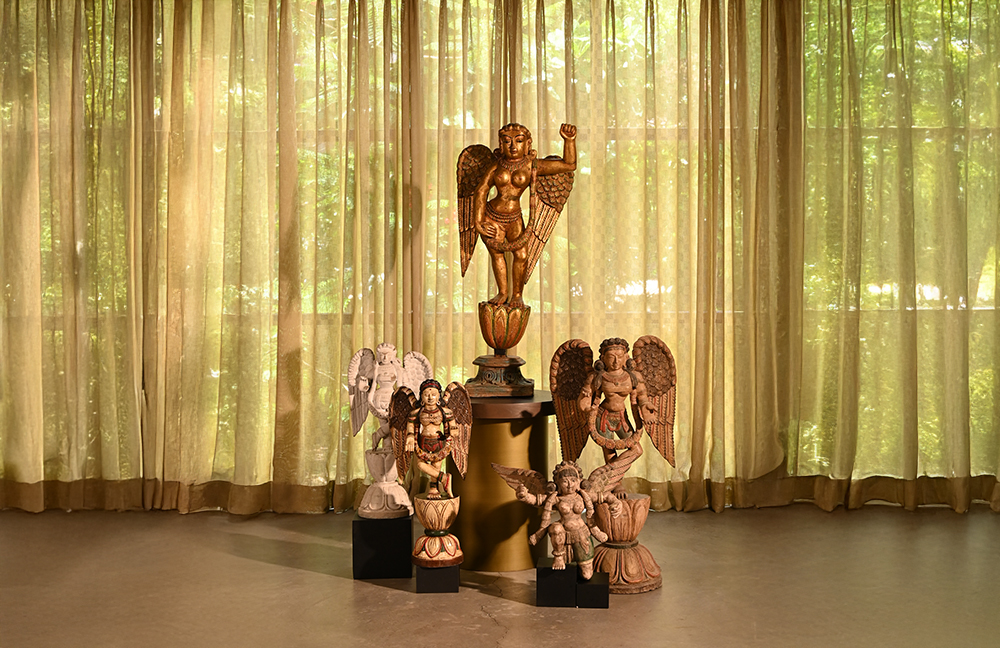
Some objects resist singular histories. The Pondicherry Angel – dating back to the early to mid-20th century, is one such witness.
At first glance, it appears unmistakably European: a winged celestial messenger rendered in wood, its softly painted surface mellowed by time, its gilded wings spread. Yet a closer look reveals another story. A sacred cord crosses the torso, recalling the yajnopavita worn in Hindu tradition. A delicate tilaka rests upon the forehead. The abundant curls, meanwhile, echo the powdered wigs of French colonial portraiture. Neither entirely Indian nor wholly European, the figure inhabits a visual language born of coexistence.
As the principal French settlement, Pondicherry became a landscape where Indian architectural forms, religious customs, and artisanal practices intertwined with European influences. Objects, too, absorbed these exchanges. Angels such as this adorned the processional chariots and palanquins that carried temple deities through the streets, their forms closely resembling the decorative figures found on the sedan chairs and ceremonial coaches of French colonial officials.
This angel stands as a testament to that layered inheritance: a rare fragment of material culture where devotion, empire, and craftsmanship converge into a form that belongs wholly to neither tradition, yet unmistakably to both.


ARCHIVE 04: GARUDA
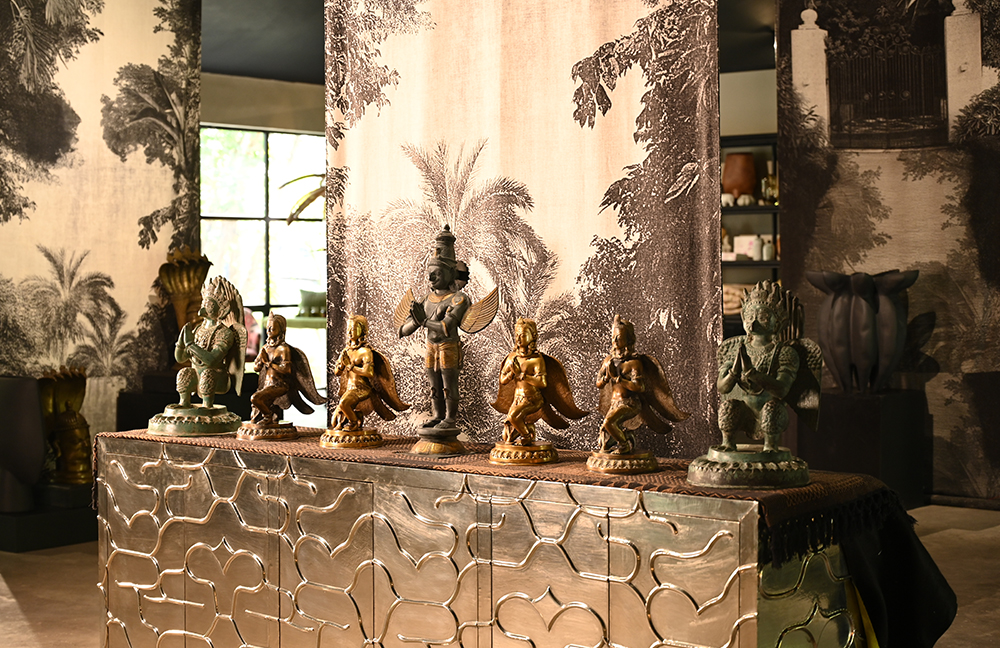
At once celestial being, guardian, and devoted companion, the Garuda’s image has travelled across centuries with remarkable constancy, carrying meanings that remain as resonant today as when they first entered the Indian imagination.
The earliest echoes appear in the Rigveda, where Garutman is invoked as a radiant bird of the heavens, associated with the sun and the vast expanse between worlds. Over time, this luminous presence evolved into Garuda, the divine mount of Vishnu, whose strength is matched only by his unwavering devotion. He is often depicted with the body of a man and the wings of an eagle, a form that reconciles the human and the transcendent.
He emerges from granite temple walls, bronze icons, painted manuscripts, woven textiles, and carved wood. His proportions may change, his ornament may vary, but his posture remains unmistakable: wings poised in readiness, palms joined in reverence, gaze fixed upon the divine. It is a portrait of power expressed through humility.
More than a mythological figure, he stands as a reminder that sacred imagery was never conceived merely to illustrate stories, but to give lasting form to ideals that transcend time, region, and medium.

$715.00
$715.00

$1,226.00
$1,226.00

$885.00
$885.00

$405.00
$405.00

$2,846.00
$2,846.00
ARCHIVE 05: PANJURLI
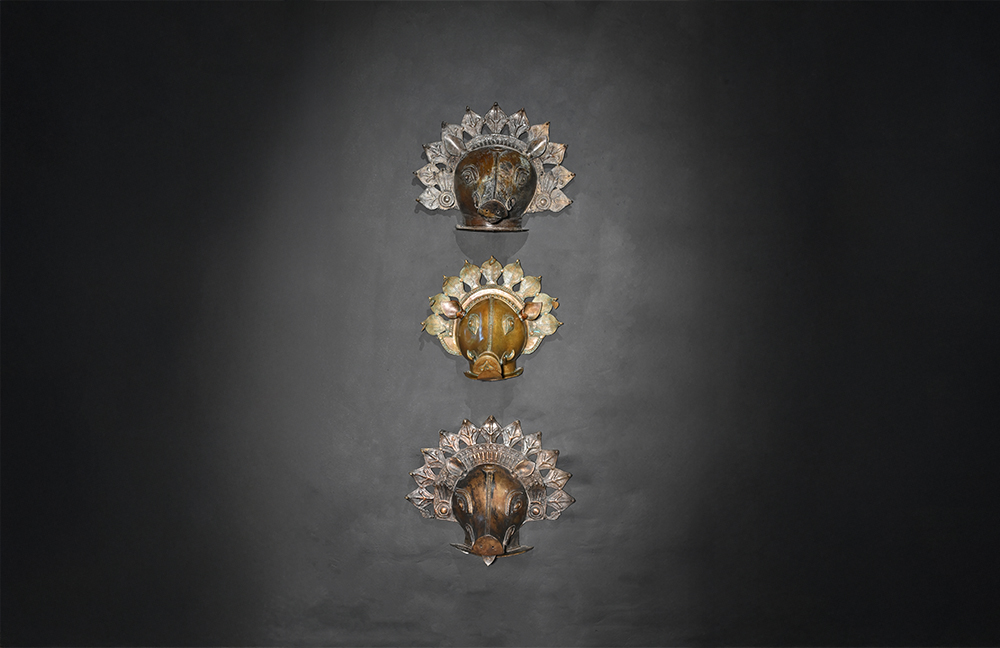
In the ritual traditions of Tulunadu, along India's southwestern coast, the Panjurli mask is a theatrical prop as well as a sacred threshold. When worn during Bhuta Kola, it becomes a visible presence of the divine through dance, possession, and dialogue.
This 19th-century brass mask represents Panjurli, the boar-faced guardian spirit revered across the Tulu-speaking regions of Karnataka and Kerala. According to the Paddanas - the oral epics of the region - Panjurli was once the cherished wild boar of Goddess Parvati. Mischievous and untamed, the creature wandered through the gardens of Kailash until Shiva, in a moment of anger, struck it down. Grief followed. To restore balance, Shiva returned the boar to life, sending it into the world as a protector spirit.
The mask gives material form to that transformation. A pronounced tusked snout, serpent motifs, auspicious markings upon the brow, and a towering crown alive with cobras speak in the symbolic language of Tulu ritual.
For centuries, Bhuta Kola has been as much a social institution as a sacred rite. Within these nocturnal ceremonies, spirits were invoked to bless harvests and safeguard villages. Families sought counsel, communities sought justice, and the possessed performer - transformed by mask, costume, rhythm, and trance - became the voice through which the unseen answered the living.
The Panjurli reminds us that within India's material culture, craftsmanship has often served a higher purpose: not simply to depict the sacred, but to invite it into the world.

$1,593.00
$1,593.00

$1,593.00
$1,593.00

$1,593.00
$1,593.00
ARCHIVE 06: THEYYAM BREASTPLATE
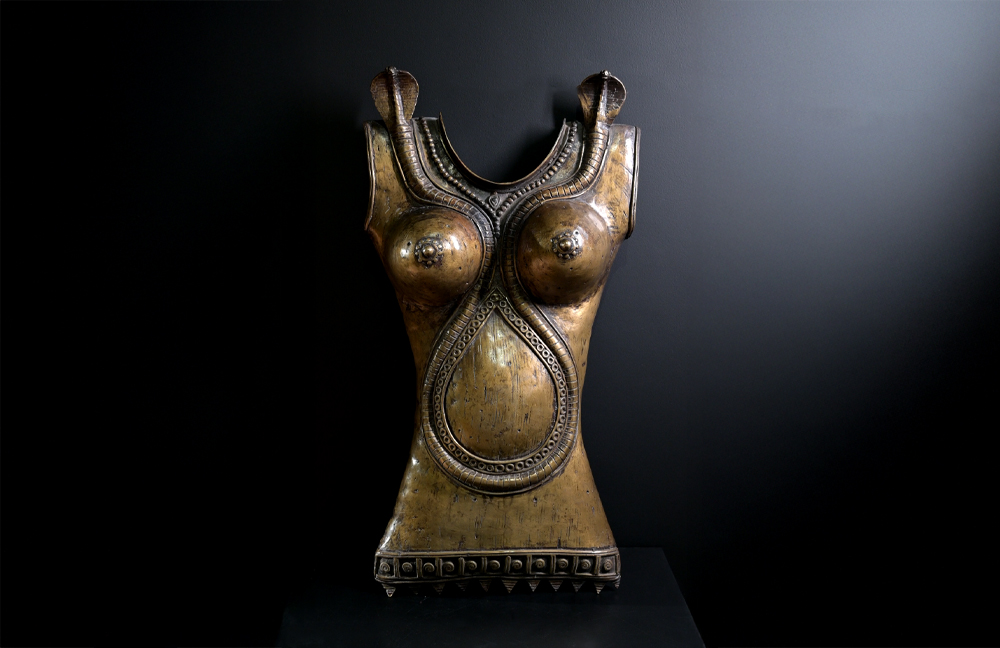
In the sacred groves of northern Kerala, as dusk settles and oil lamps are lit one by one, the first beat of the chenda announces the arrival of Theyyam. For centuries, this ritual has transformed village shrines into spaces where the boundary between the human and the divine dissolves. Here, performance is not spectacle but devotion. The dancer does not portray the deity; he becomes it.
The Theyyam Breast Plate is central to this transformation. Cast in bronze and brass, it rests across the torso as armour, carrying sculpted serpents, layered necklaces, and symbols associated with Bhadrakali, the fierce yet protective Mother Goddess. Its sculptural form evokes abundance, power, and fertility, while the cobra, a recurring motif, invokes Shiva and the regenerative forces of nature.
Worn only during the annual Theyyam ritual, the breastplate is part of an elaborate visual language through which Gods descend into the mortal world. Alongside towering headdresses, painted faces, and rhythmic movement encircled by fire, it helps create an embodied archive of stories that have never relied on written history.
The Theyyam Breastplate is so much more than a ceremonial attire. It is an object that holds the weight of faith, transforming metal into a vessel through which divinity is believed to speak. Within its sculpted surface lives a tradition where craft, mythology, and performance remain inseparable, preserving one of India's oldest living ritual rituals.

$1,593.00
$1,593.00