We use cookies to make your experience better. To comply with the new e-Privacy directive, we need to ask for your consent to set the cookies. Learn more.


FRANCE, INDIA, AND THE ART OF CONTEXT: IN CONVERSATION WITH RODOLPHE PARENTE

There is a certain restraint in French elegance, an ease that never clamours for attention yet commands it entirely. Rodolphe Parente embodies this paradox. Poised yet probing, cerebral yet sensorial, the Paris-based radical architect and interior designer arrived at The House of Things Gallery in Udaipur with the curiosity of a man who believes design begins not with answers, but with questions.
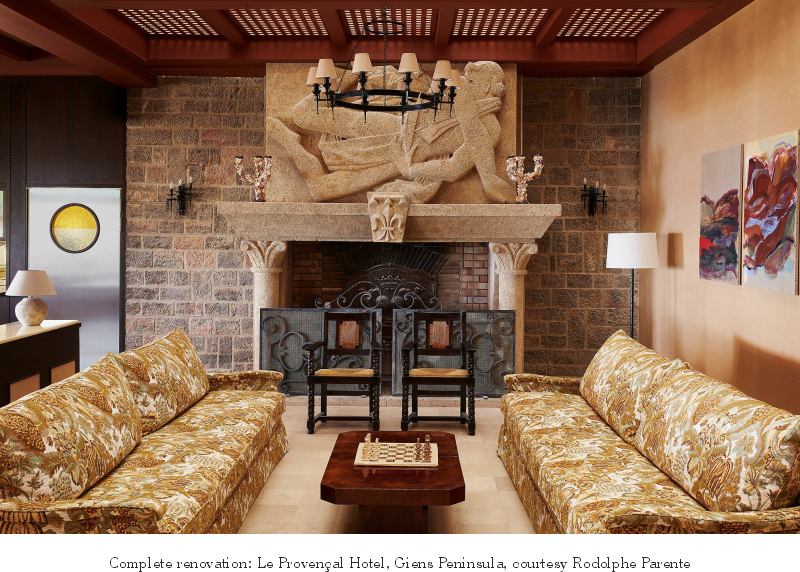
Born to an Italian father and French mother, Parente carries dual cultural inheritances, a duality that echoes in his aesthetic vocabulary. A graduate of the École Nationale des Beaux-Arts in Dijon and the École Supérieure des Arts Décoratifs in Strasbourg, he later refined his product design sensibility at ECAL in Lausanne. His early collaborations with the legendary Andrée Putman shaped his sensitivity toward modernist clarity and material precision.
But his creative lineage stretches further back. He often cites Pierre Chareau, whose Maison de Verre remains a manifesto of modernist audacity; Gio Ponti, the maestro of Italian lightness; and Carlo Scarpa, the poet of architectural detail. These influences are points of departure for Parente’s own investigations into material tension and spatial alchemy.
THOT: What are you currently reading?
RP: Mostly Italian and French literature. I’m half Italian and half French, so I feel very connected to both cultures. I love writers like Annie Ernaux, and Pier Paolo Pasolini. It’s a very dry kind of literature, but very sensitive.
THOT: You’ve been in India 3 days, and have no doubt, tried some Indian food. What’s your favourite dish so far?
RP: The vegetables here are totally crazy. Paneer was delicious. I don’t recall the names of the dishes, but I know when it’s spicy, it’s good.
THOT: What cuisine can you never really resist?
RP: Italian cuisine, of course - I truly love it. But Indian cuisine has been a real discovery. The use of spices, the layering of taste…in a way, it reminds me a little of Italian cooking. There’s something familiar, but with a twist.
THOT: An artist whose work you’d love to collect…
RP: if I had the money, probably James Turrell. His work is very mental, very spiritual. You don’t know if it’s art, painting, or space. It exists in between. You are inside the artwork; it’s an environment.
THOT: Your interior design icon?
RP: Probably Pierre Chareau. He designed one of the most incredible houses in Paris, Maison de Verre. It’s like a manifesto of modernist shapes - radical, intelligent, and still relevant.
THOT: Antique treasure or contemporary collectible?
RP: Contemporary. I am a contemporary guy. I want to promote my era, our mood, our culture. That feels important to me.
THOT: A city that constantly inspires you?
RP: Rome. It’s like a huge museum - without limits, without era. There are so many layers of culture, so many styles coexisting. It’s very singular. You can pick something from every period. It’s endless inspiration.
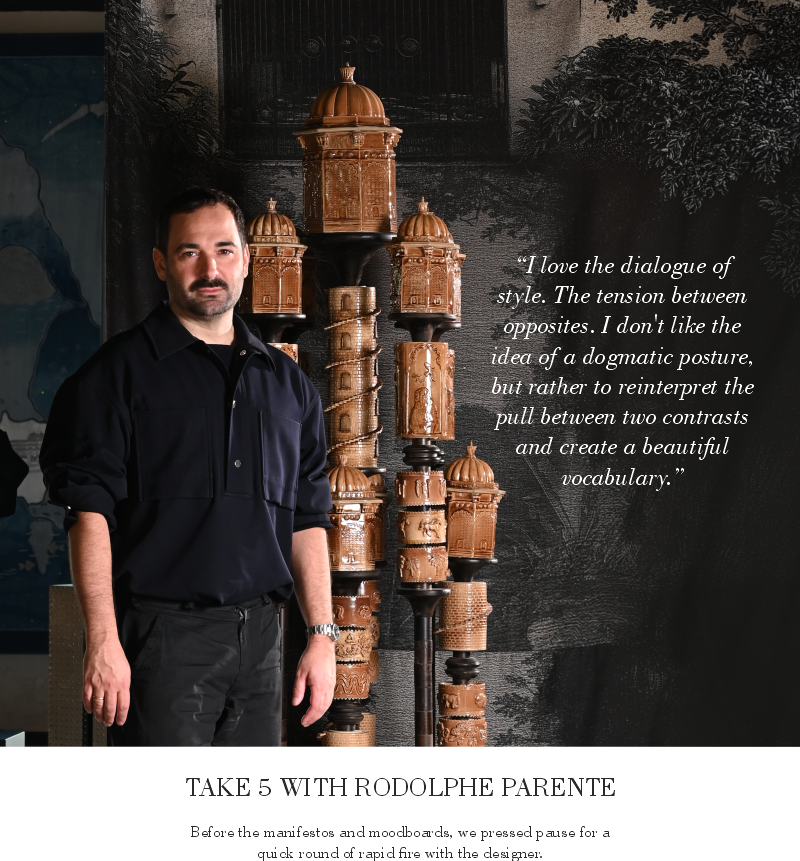
Much like The House of Things, Parente gravitates toward eclectic palettes and dramatic compositions. When asked about this shared affinity, his response is immediate: “I love the dialogue of styles. I love contrast.”
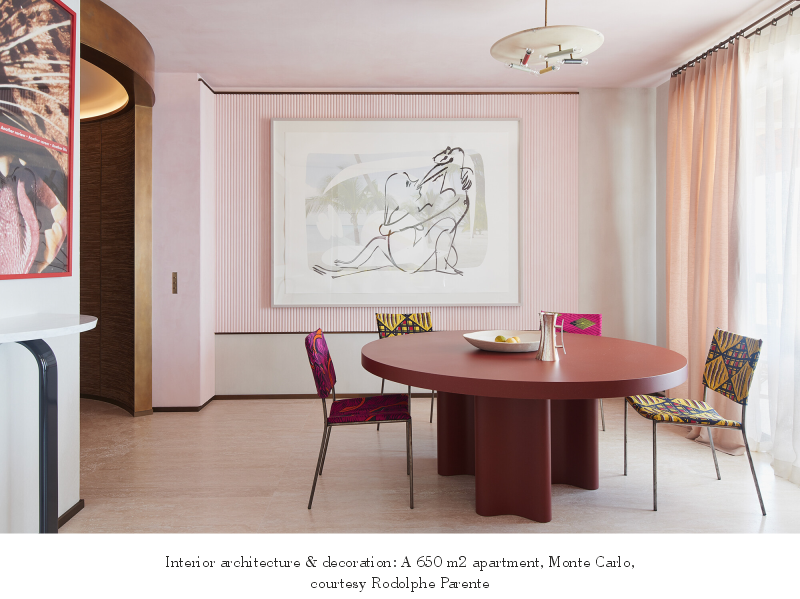
Contrast, for Parente, is not aesthetic rebellion; it is equilibrium. Matte against gloss. Poor against rich. Shadow against light. Solid forms meeting edgy silhouettes. It is in this friction, this carefully orchestrated opposition that beauty emerges. His interiors remain open-ended compositions, inviting the inhabitant to complete the story.
When discussing the difference between designing furniture and designing interiors, Parente dismisses hierarchy. “It’s the same paradigm,” he explains. “Whether crafting a hotel or a teacup, the question remains constant: How does the user inhabit the object or space?”
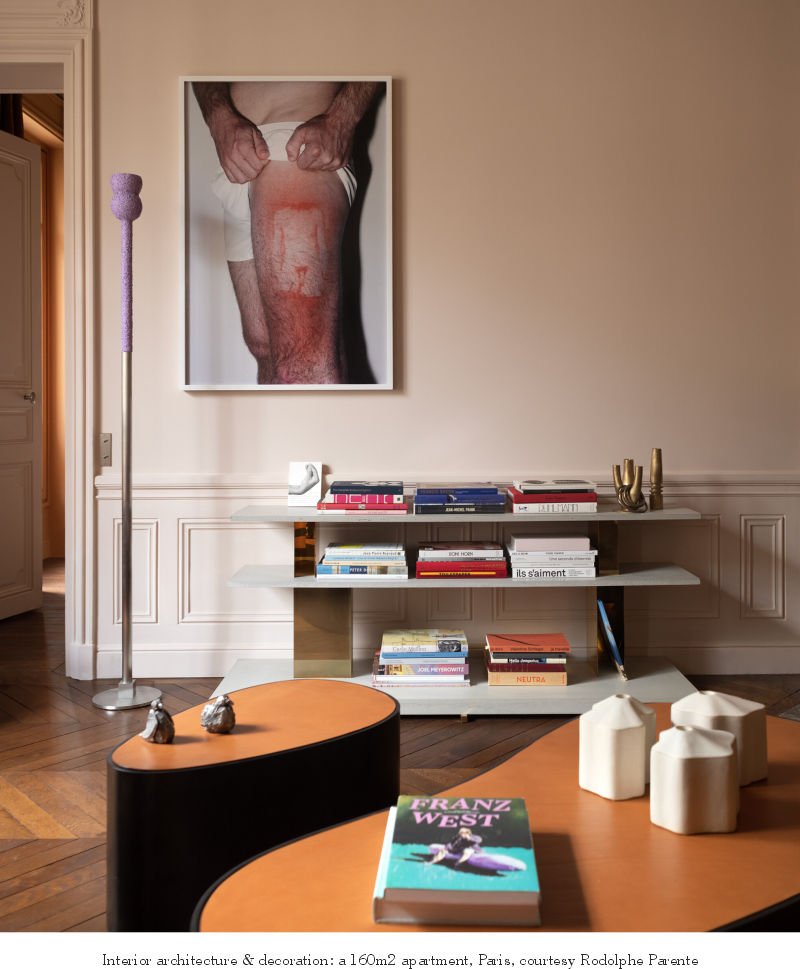
He speaks often of savoir-faire - of understanding craftsmen, of translating heritage techniques into contemporary silhouettes. Each project is contextual. A Haussmannian apartment in Paris demands a different dialogue than a commission in Osaka or New Delhi. “The frame is the same,” he explains. “What you put in the frame is different.”
“The design also depends on the typology of our productions. But we play with that. We love to reinterpret details, and to enhance the heritage vocabulary.”
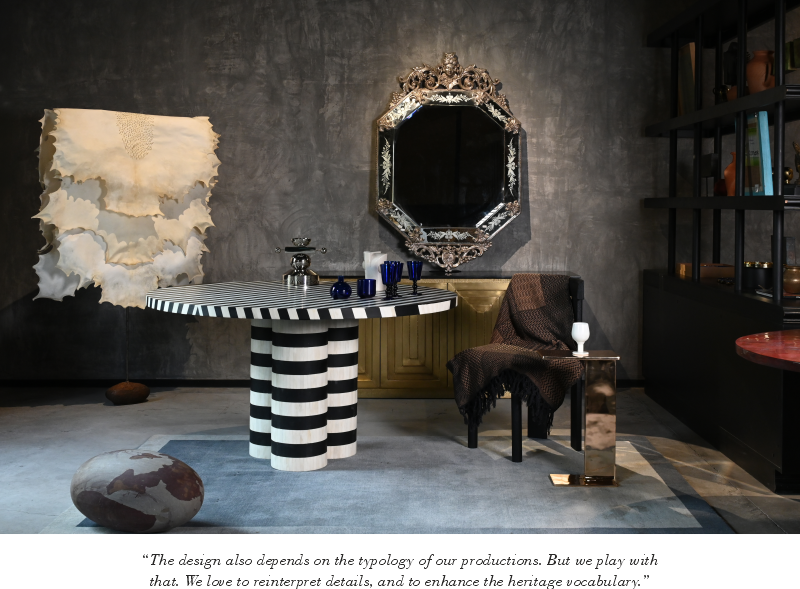
When asked what resonated most during his time at The House of Things Gallery, Parente paused in reflection. “The quality. The production. The diversity,” he observed. From minimalism to maximalism, the gallery’s spectrum of collectible design impressed him. The ability to curate across stylistic boundaries, to compose one’s own visual narrative, felt particularly compelling to the designer.
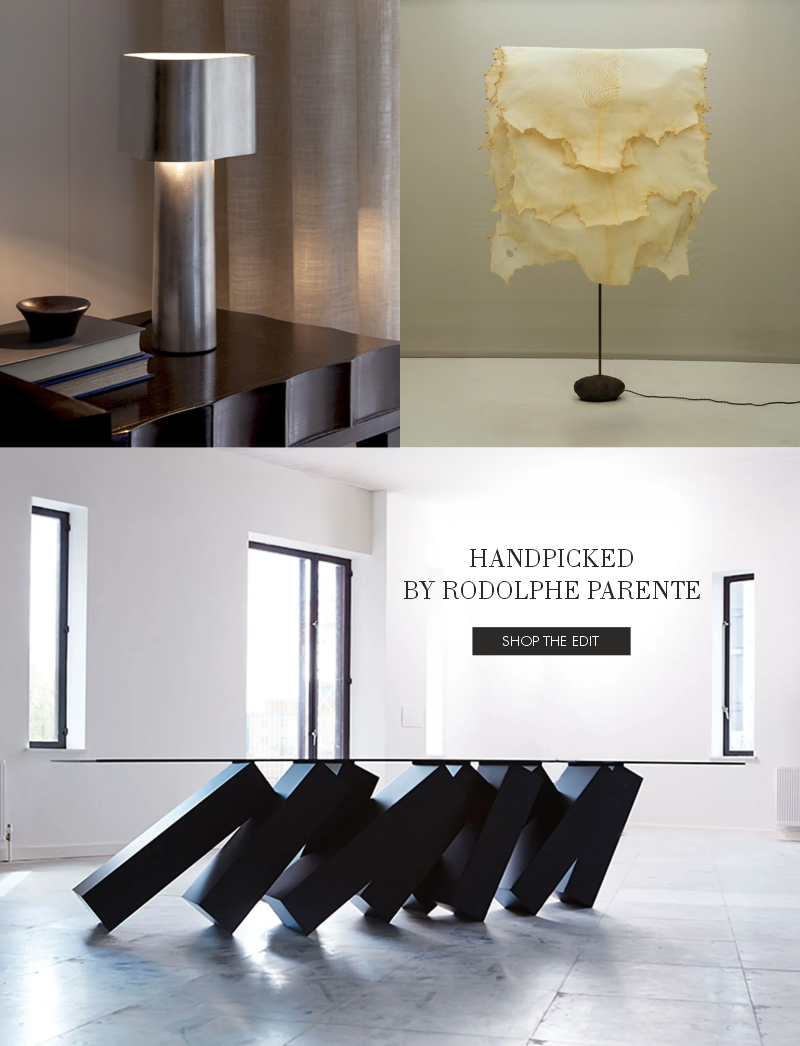
He handpicked his standout favourites - among them the Zuma Hall Table, a masterclass in fine inlay craftsmanship, and the Akasha Floor Lamp, a feat of artistic manipulation. His selections felt instinctive and assured…proof that effortless elegance comes naturally to the French.
We concluded with a question that felt almost philosophical: What should one feel upon leaving a Rodolphe Parente interior?
His answer was disarmingly humble.
“To forget the interior designer in the space. It’s their own project. To avoid feeling me inside.”
It is perhaps the most refined form of authorship, to create so seamlessly that one vanishes within the experience.
And in that sensibility, France and India briefly met - as collaborators in the art of context.